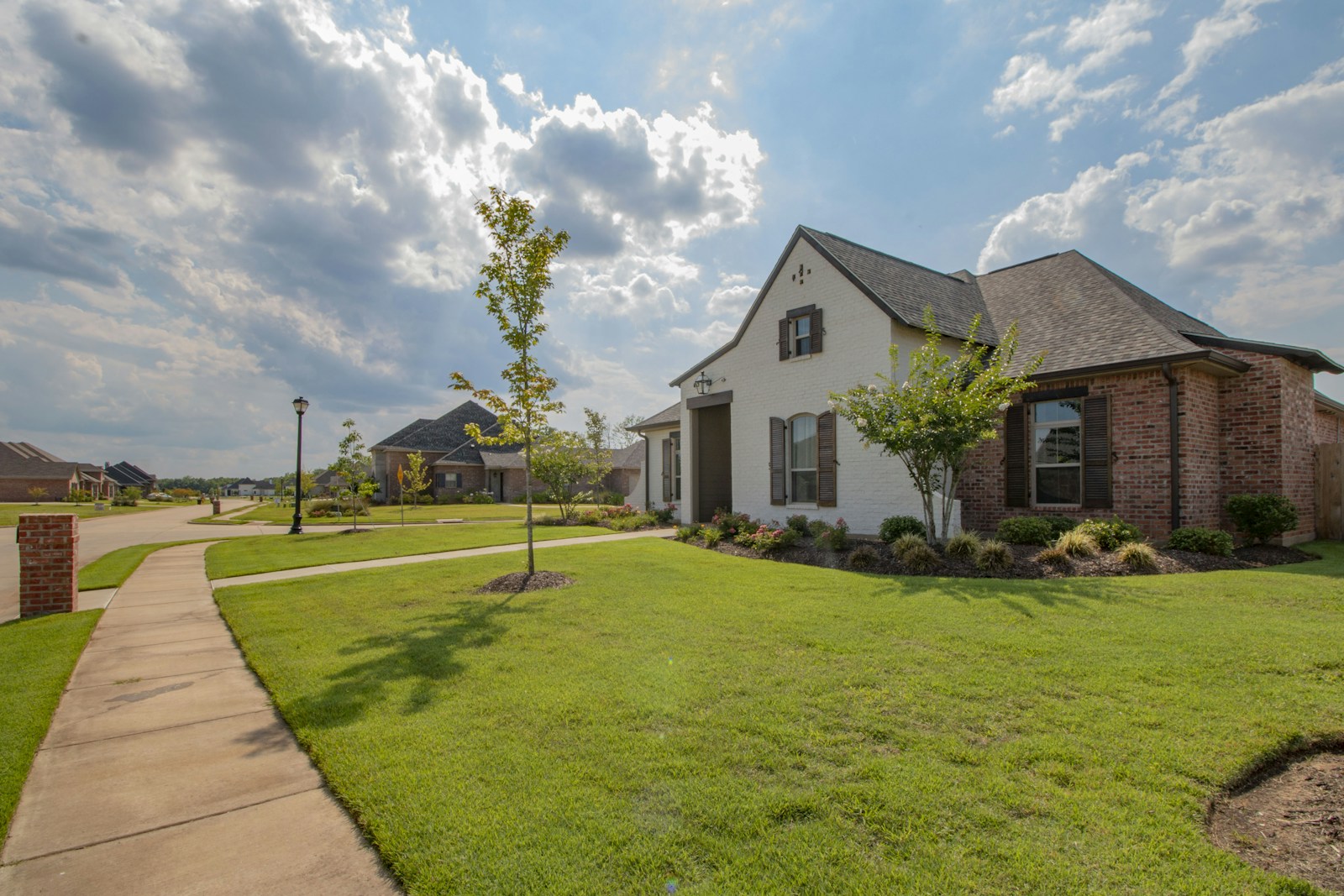
St. Albert has a reputation as a quiet, affluent city just north of Edmonton, and the numbers back that up. The city's population growth continues at a steady 2.2 percent a year, and average income here runs 18 percent higher than the rest of the Edmonton region. But a city isn't really its averages. It's the specific streets where that character actually took shape, often by accident, sometimes by stubbornness, and occasionally because one resident decided to build something nobody asked for.
At Bermont Realty, we think the story behind a neighbourhood matters as much as its listing price. Here's how four very different corners of St. Albert ended up with such different personalities, and what that means if you're choosing among homes for sale across St. Albert.
Akinsdale Was Built to Spite Edmonton
In the mid-20th century, Edmonton was swallowing its neighbours whole. Beverly, Jasper Place, and other surrounding towns disappeared into the growing city one annexation at a time. St. Albert wanted none of it, and when Akinsdale's boundaries were drawn in the early 1970s, they were deliberately shaped to make the neighbourhood unattractive to Edmonton's appetite for expansion.
It didn't matter. Demand for Akinsdale was so intense that developers couldn't build fast enough, and in an almost unheard of move, residents were allowed to move into homes before the roads and utilities around them were even finished. The four kilometres of greenspace that once separated the two cities has since narrowed to a single ring road, but Akinsdale still carries the quiet satisfaction of having won its standoff. That's not a subculture built around a person. It's a subculture built around defiance, and it still shows in a neighbourhood that values its own identity over convenient proximity to the bigger city next door. Browse current Akinsdale homes for sale to see what that established character looks like today.
Grandin Raised an Ark Builder and a Future Lieutenant Governor
Grandin is one of St. Albert's oldest and largest communities, and it has produced two of the city's more unlikely characters. In the 1970s, a resident named Don Clark spent four years building a 46-foot concrete boat in his driveway. He called it Clark's Ark, and when it was finally finished, it was towed all the way to the Pacific Ocean.
Around the same time, a young organist was playing at Grandin's United Church. Her name was Lois Hole, and she went on to become a commercial greenhouse owner, an author, and eventually Alberta's Lieutenant Governor. She's remembered today through landmarks like the Lois Hole Hospital for Women. Grandin's real character isn't that it produced two famous names. It's that a neighbourhood this ordinary on paper turned out to have room for both a backyard shipbuilder and a future Lieutenant Governor, and treated them as equally at home. Take a look at Grandin homes for sale to see one of St. Albert's oldest communities up close.
Mission Survived the City's Hardest Years to Become Its Quietest
Mission is where St. Albert actually began. In the 1860s, Father Lacombe and Bishop Taché chose a hillside overlooking the Sturgeon River as the site for a new mission, and Métis families arrived from Lac Ste. Anne to settle it. What followed wasn't easy. A smallpox outbreak killed roughly half the community's residents, and the settlement had to rebuild almost from nothing before St. Albert reached village status in the 1890s and town status by 1904.
Today Mission is one of the city's smallest and oldest neighbourhoods, with a median age well above the city average. It carries none of the urgency of its founding. What survives instead is a kind of settled calm, a neighbourhood that already went through its hardest chapter more than a century ago and has been quietly stable ever since. See what's currently available among Mission homes for sale.
Sturgeon Heights Was Built as a Social Experiment
Most St. Albert neighbourhoods grew organically. Sturgeon Heights was planned as something closer to a deliberate mix. When development took off in the 1950s, city council intentionally zoned the community into three tiers, upper income housing in one zone, middle income in another, and lower income in a third, all within the same neighbourhood boundaries. Every street name in Sturgeon Heights also starts with the letter S, a small detail from an era when St. Albert had just begun naming its streets instead of numbering them.
The result wasn't segregation by income, it was integration by design. Decades later, Sturgeon Heights is still known as one of the city's most desirable and unpretentious communities, regardless of what a given street's homes were originally priced for. That's a subculture built on an idea rather than an individual, that a community works better when it isn't sorted by income in the first place. Explore Sturgeon Heights homes for sale to see how that legacy still shapes the streets today.
What This Means When You're Comparing Neighbourhoods Today
None of this history changes what a home costs or how long your commute will be. But it does explain something a spec sheet never will, why one St. Albert neighbourhood feels defiant, another feels historic and settled, and another still carries the fingerprints of a fifty year old social experiment. If you're deciding between communities that look similar on paper, this is usually the difference that actually matters once you've lived there a few years.
The Bigger Picture Shaping St. Albert Right Now
It's also worth knowing what's happening at the city and federal level while you're comparing neighbourhoods. St. Albert continues to grow at roughly 2.2 percent annually, and infrastructure spending is following that growth. The federal government's Build Communities Strong Fund is putting more than $28 million into wastewater and stormwater expansion in Northeast St. Albert, and the province has fast tracked a new Kindergarten to Grade 9 public school for the Chérot neighbourhood, with a K-9 Catholic school also planned for Riverside, one of the city's newest communities.
At the national level, the Carney government has set a target of 500,000 housing completions per year, alongside a new GST rebate for first time buyers on new builds under $1 million, with a partial rebate up to $1.5 million. A new federal agency, Build Canada Homes, is meant to speed up construction using public land and flexible financing. Economists are split on how much of this will actually move the needle, since only a small share of 2026 completions are expected to qualify for the rebate, and construction labour shortages remain a real constraint. For a St. Albert buyer, the practical takeaway is narrower than the headlines suggest. If you're a first time buyer eyeing new construction under that price threshold, it's worth factoring into your timeline. If you're buying resale, which describes most of this market, these programs affect you only indirectly. For more on avoiding costly missteps along the way, see our guide to common home buying mistakes in St. Albert.
Finding the Neighbourhood That Actually Fits
St. Albert's neighbourhoods look similar in a listing search, similar price ranges, similar access to parks and schools, similar transit routes. What separates them is harder to search for, the specific history that shaped how each one grew, and the kind of resident it has always attracted. If you're weighing your options across St. Albert, Bermont Realty can walk you through what each neighbourhood actually offers, not just on paper, but in practice. Browse our full selection of homes for sale in St. Albert, or reach out to our team to start the conversation.